


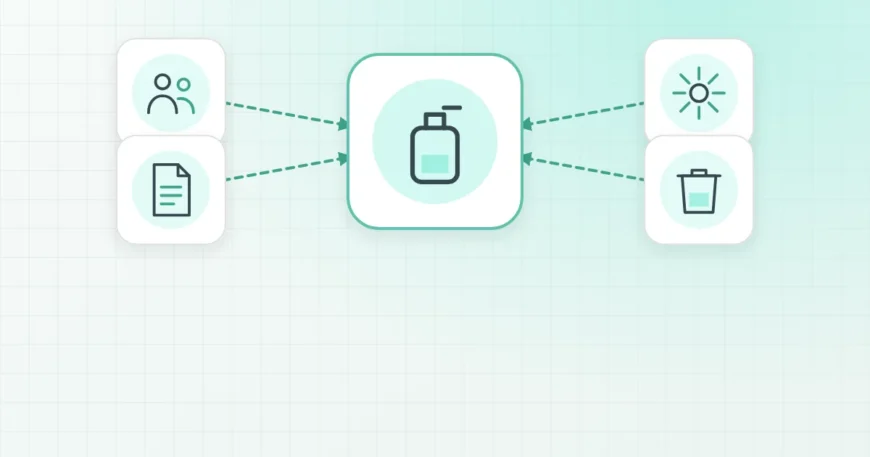
Smart soft services use sensors to tell cleaning teams where they are needed, instead of sending them on fixed rounds. Smart washroom sensors count visitors and track odour, soap and paper levels, and the platform turns those readings into tasks.
Why fixed cleaning rounds fall short
A washroom used by hundreds of people at lunchtime needs more attention than one used by twenty. Fixed rounds treat them the same. Teams clean rooms that are fine and miss rooms that ran out of soap an hour ago, which is what visitors remember.
What the sensors measure
What changes for the FM team
- Cleaning by need: tasks go out when a threshold is reached.
- Fewer complaints: soap and paper are refilled before they run out.
- KPIs: response times and service levels are measured, not estimated.
- Integration: data can reach the wider facilities management system through FM360.
Frequently asked questions
What are smart soft services?
They are cleaning and hygiene services planned from live sensor data, such as visitor counts and consumable levels, instead of fixed rounds.
Do washroom sensors need power cables?
Most sensing modules are battery-powered. The people counter runs on micro-USB power.
Which buildings benefit most?
Busy sites with many washrooms, such as malls, offices, airports, schools, hospitals and hotels.

Related pages
Want smarter washrooms?
Tell us how many washrooms you manage, and we will suggest the right sensor mix.
Talk to our team
