


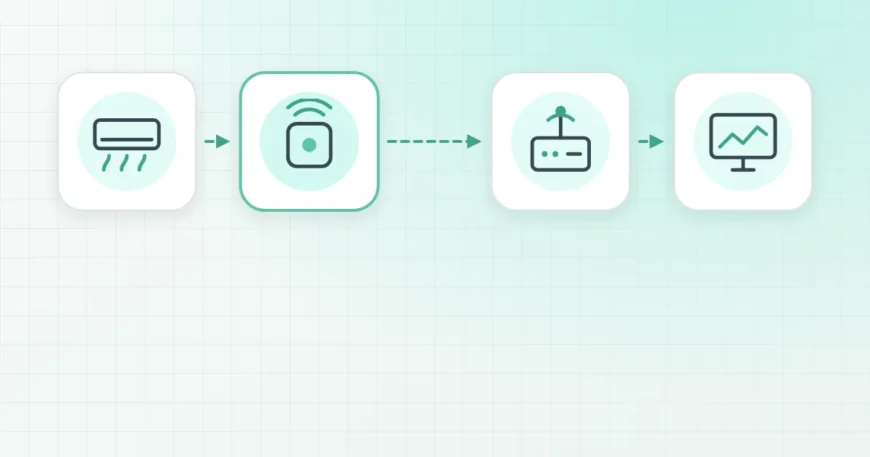
An innovative building management system uses wireless devices and a cloud platform to give small and medium buildings the control that used to need a wired BMS. AirBMS connects thermostats, sensors and meters over radio, so a building can be monitored and controlled from one dashboard within weeks.
Why do small and medium buildings miss out on BMS?
A wired BMS makes sense in a large new tower, where the cabling goes in during construction. In a school, clinic, showroom or office block that is already in use, the same system means opening ceilings, running cables and disturbing occupants. The cost per square metre is high, so many of these buildings run their AC units by hand.
That is where most of the waste happens. Units are left on overnight, setpoints drift, and nobody sees it until the bill arrives. In the UAE, cooling is about 70% of peak load, so even simple control makes a difference.
How does AirBMS work?
- Schedules: units switch on and off by timetable, room by room.
- Setpoint limits: stop rooms being cooled below a set temperature.
- Alerts: see units left running or rooms that never reach setpoint.
- Reports: energy and runtime by floor, room or building.
What results can you expect?
At a private school in Dubai, ThermoSense thermostats with AirBMS cut energy use by 10 to 15%. A typical building goes live in about 30 days, and a wireless system is typically 30 to 40% below the cost of a wired BMS.
Frequently asked questions
What is AirBMS?
AirBMS is the MachineSens wireless building management software. It connects ThermoSense thermostats, sensors and meters over radio and lets teams set schedules, limits and alerts from a browser.
Is AirBMS suitable for small buildings?
Yes. It was designed for small and medium buildings that never had a BMS, such as schools, clinics, offices and showrooms.
Which AC units can it control?
ThermoSense covers fan coil units, DX units, split units and window units, using wired or infrared control depending on the unit.

Related pages
Want to see it on your building?
Send us the building type, size and the systems you run today. We will outline sensors, scope and timeline.
Talk to our team
