


LoRaWAN energy meters from MachineSens IoT make up the Energy Eye range. It covers 3-phase and single phase DIN rail meters, panel meters, split-core CTs, Rogowski coils and a heat meter. Each one sends readings to the BuildOT One platform, over LoRaWAN directly or through a converter, for UAE and GCC buildings.
Choose the right Energy Eye meter
| Meter | Best for | Phase or type | Current range | Connectivity |
|---|---|---|---|---|
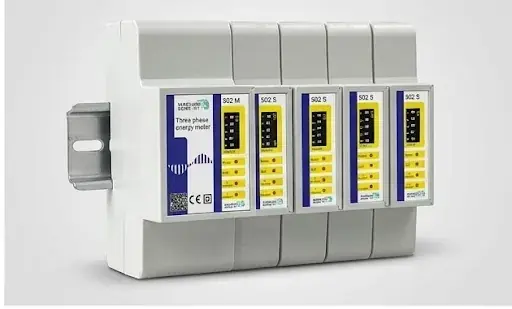 3-phase DIN rail meter 3-phase DIN rail meter | Three phase feeders and distribution boards | Three phase, 4-wire, 3×230/380V | Up to 50A with internal CTs, 100 to 5000A with external CTs | LoRaWAN and Modbus RS-485 |
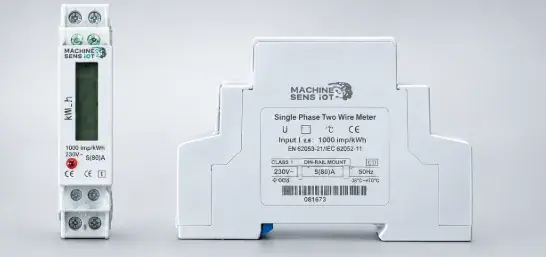 Single phase DIN rail meter Single phase DIN rail meter | Tenant units, lighting and small power circuits | Single phase, Class 0.5 and Class 1 variants | See product page | Modbus RS-485, optional LoRaWAN or 4G expansion |
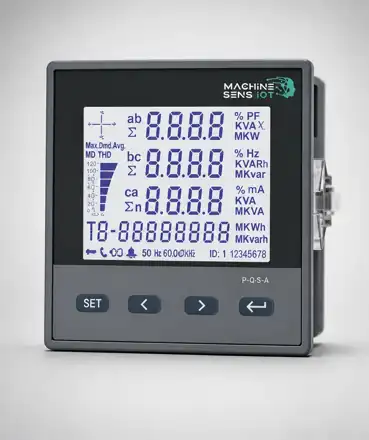 300 PDM panel meter 300 PDM panel meter | Multi-phase panels needing harmonic data | Multi-phase, Class 1 and Class 0.5S | See product page | Modbus RS-485 |
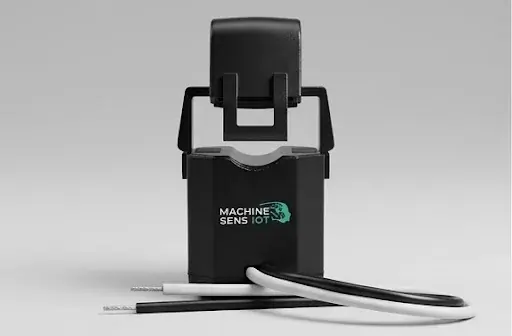 300 SCT split-core CT 300 SCT split-core CT | Retrofits where circuits cannot be switched off | Split-core current transformer | L-Series 5 to 120A, H-Series 5 to 160A, T-Series 5 to 600A | Wired to an Energy Eye meter |
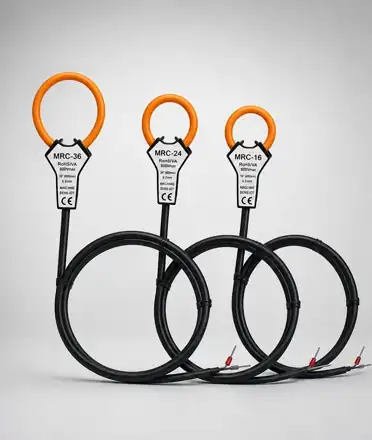 Rogowski coil MRC series Rogowski coil MRC series | Large or awkward conductors and smart grid work | Flexible Rogowski coil | See product page | Wired to an Energy Eye meter |
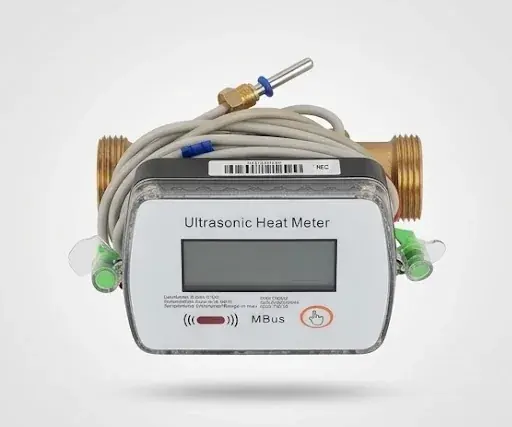 HM heat meter HM heat meter | Hot water and heating energy | Ultrasonic heat meter, DN15 to DN40 | See product page | M-Bus or Modbus RS-485 |
Two meters list LoRaWAN directly. The 3-phase DIN rail meter has it built in, and the single phase meter offers it as an optional expansion. The other Energy Eye meters connect over Modbus RS-485 (the HM heat meter also offers M-Bus). They reach LoRaWAN through the Convert+ Modbus to LoRaWAN converter. The 300 SCT and Rogowski coil are current sensors that work with an Energy Eye meter.
How LoRaWAN energy metering works
- The meter measures. An Energy Eye meter reads voltage, current, power and energy at the distribution board or feeder.
- The data goes wireless. The 3-phase meter sends it over LoRaWAN (EU868) itself. Modbus RS-485 meters use a Convert+ converter to do the same.
- The Edge gateway collects it. A MachineSens Edge gateway receives the LoRaWAN messages and passes them to the cloud.
- BuildOT One shows it. The Energy and Utilities module tracks consumption by circuit, tenant and floor.
Where it is used
Tenant submetering. Single phase and 3-phase DIN rail meters give each tenant, villa or hotel zone its own readings.
Chillers and plant. Clamp-on CTs and Rogowski coils measure large feeders without long cable runs back to a controller.
Campuses and live buildings. Wireless meters suit sites with many distribution boards spread across buildings. At a beachfront hotel in Ajman, wireless meters cost about 30% less than an RS485 retrofit. Read the Ajman hotel case study. For a multi-building example, see HCT metering.
Related pages
Browse the full Sustainability and utilities range. To check savings from efficiency projects, see the Measurement and Verification module.
Frequently asked questions
What is a LoRaWAN energy meter?
It is an electricity meter that sends its readings over a LoRaWAN radio link instead of a cable. MachineSens uses LoRaWAN EU868.
Which Energy Eye meters support LoRaWAN?
The 3-phase DIN rail meter has LoRaWAN built in, and the single phase meter offers it as an optional expansion. Other models connect over Modbus RS-485.
Can a Modbus RS-485 meter use LoRaWAN?
Yes. The Convert+ converter turns Modbus RS-485 data into LoRaWAN, so the meter does not need a cable run to a gateway.
What current range does the 3-phase meter cover?
Internal CTs measure up to 50A directly. External CTs extend the range from 100A to 5000A.
How do the meters feed BuildOT One?
Readings reach the Energy and Utilities module through an Edge gateway, where they are shown by circuit, tenant and floor.
Need help choosing a meter? Request a quote
